China Top 10 Solar Panels for Business Suppliers

China has become a central force in global solar manufacturing, making supplier selection both attractive and difficult. The International Energy Agency’s Renewables 2024 report expects solar photovoltaic power to drive most new renewable capacity through 2030. IRENA’s Renewable Capacity Statistics 2025 recorded about 452 GW of new solar capacity worldwide in 2024. These figures show strong market momentum, but they do not guarantee that every manufacturer suits a commercial project.

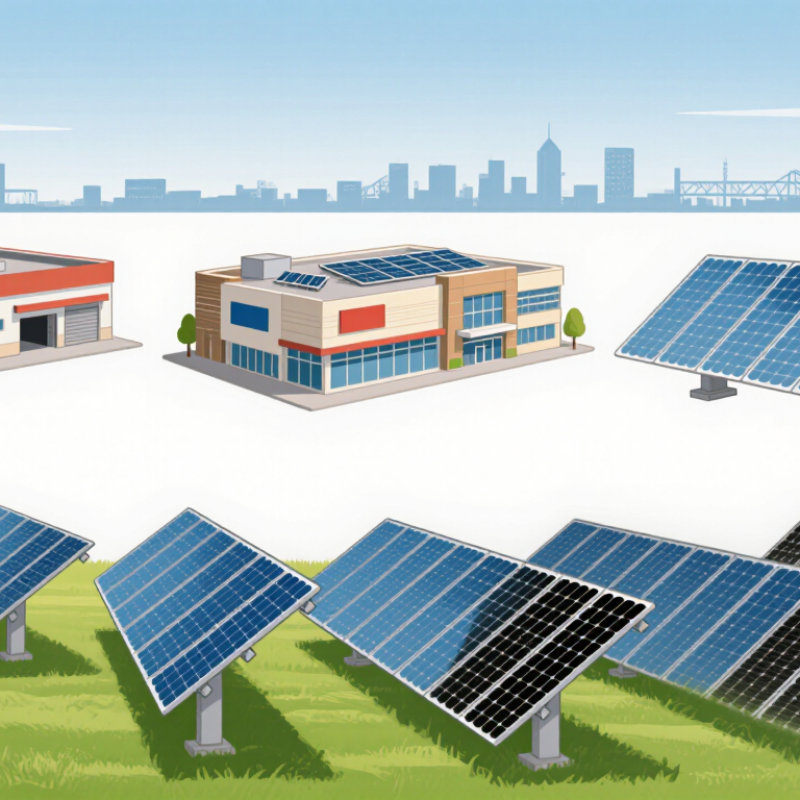
This guide examines China’s top 10 suppliers of solar panels for business applications. The comparison considers module efficiency, temperature performance, degradation rates, warranty terms, production scale, certifications, and documented project experience. A warehouse roof, factory site, and shopping center may require very different design decisions. For example, limited roof space may favor high-efficiency modules, while a large ground-mounted project may prioritize cost and long-term energy yield.

Bankability matters.

Reports from BloombergNEF, IEA PVPS, and Wood Mackenzie consistently emphasize manufacturing strength, financial stability, and supply-chain reliability when assessing module providers. However, rankings can oversimplify reality. A famous brand may still perform poorly if logistics, installation quality, or after-sales communication is weak. Product datasheets also represent controlled conditions, not every dusty rooftop or humid coastal site.

The following suppliers are therefore discussed through a practical procurement lens. Readers should verify current certifications, warranty documents, degradation guarantees, and independent testing before signing contracts. Prices and availability change quickly. That limitation deserves attention. A reliable supplier is not merely the cheapest option; it is the partner that can deliver consistent modules and credible support throughout a commercial system’s operating life.
China Top 10 Solar Panels for Business Suppliers

What Defines a Reliable Chinese Solar Panel Supplier for Businesses

A reliable Chinese solar panel supplier must prove performance beyond a sales presentation. The IEA’s Renewables 2024 report recorded about 510 GW of new renewable capacity in 2023. Solar PV supplied nearly 75% of that growth. This scale makes supplier verification essential for business buyers.

Look for documented factory controls, not only impressive production capacity. A dependable supplier should provide electroluminescence images, flash-test records, serial-number traceability, and calibrated equipment logs. Ask for independent certification under relevant IEC standards. Review warranty terms carefully, including degradation limits, response times, and claim procedures. The IRENA Renewable Capacity Statistics 2024 report places global solar capacity above 1.4 TW at the end of 2023. Small quality differences can become expensive across a large commercial roof.

Site audits reveal practical details. Inspect cell storage, soldering lines, glass handling, and packaging before shipment. Request samples from the same production process. Compare their measured output with the datasheet. It should be close. A supplier that explains a failed test earns more trust than one promising perfection. Still, buyers should not confuse communication speed with technical reliability. That is an easy mistake. Independent inspections, factory records, and shipment-level testing provide stronger evidence than polished brochures. Supplier selection remains imperfect, especially when future service quality is difficult to measure.
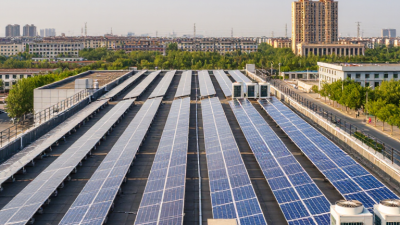
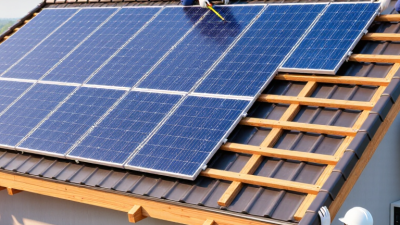
What Defines a Reliable Chinese Solar Panel Supplier for Businesses?

This illustrative procurement model shows how business buyers can prioritize supplier reliability. The 100-point weighting emphasizes certified product quality, warranty protection, financial stability, manufacturing quality control, delivery capability, and responsive after-sales support.

How the Top 10 Chinese Solar Panel Suppliers Compare

Comparing China’s top ten solar panel suppliers requires more than checking rated wattage. A serious review examines efficiency, temperature coefficients, degradation rates, and warranty terms. Many panels perform similarly on paper. Their real differences appear under heat, dust, and partial shading. Factory quality records matter too. Look for controlled testing, traceable materials, and internationally recognized certifications.

Production scale separates the suppliers in practical ways. Larger manufacturers often offer steadier supply for commercial projects. Smaller specialists may provide more flexible engineering support. Delivery estimates should include cell shortages, port delays, and inspection time. This detail is easy to overlook. It can disrupt an installation schedule by weeks. Buyers should also compare factory audits, serial-number tracking, and responses to warranty claims.

Price creates another clear gap, but the lowest quotation can hide weaker service. Compare output warranties, product warranties, insurance arrangements, and replacement procedures line by line. Ask for field performance data from similar climates. A supplier serving hot, humid regions may suit a coastal project better than one optimized for dry conditions. Some comparisons remain imperfect because suppliers publish different testing methods. That weakness deserves attention, not convenient assumptions. A balanced assessment should score performance, financial stability, technical support, delivery reliability, and lifecycle cost rather than focusing on one impressive specification.

Key Solar Technologies and Product Options for Commercial Use

Commercial solar buyers need more than a high wattage label. They need dependable output, safe installation, and predictable payback. The IEA PVPS Trends 2024 report recorded about 456 GW of new photovoltaic capacity worldwide in 2023. This growth increases product choice, but also complicates supplier evaluation. For Chinese business suppliers, key options include monocrystalline modules, bifacial designs, n-type cells, and high-power formats. Bifacial panels can capture reflected light from bright roofs or pale ground surfaces. Their value depends heavily on mounting height, spacing, and site reflectivity.

N-type technology can reduce degradation and improve performance in hot conditions. The Fraunhofer ISE Photovoltaics Report 2024 shows leading commercial modules exceeding 22% efficiency. Yet efficiency alone does not decide project quality. Review temperature coefficients, mechanical-load ratings, fire classifications, warranty terms, and independent testing records. A larger module may lower panel count, but it can create handling problems on crowded rooftops. This is an easy detail to overlook. Energy yield estimates also need local weather data, shading analysis, and realistic inverter losses.

Tips: Request complete datasheets, factory inspection evidence, and third-party test certificates. Compare annual degradation assumptions, not only first-year output. Ask suppliers for references from similar commercial roofs. Check whether replacement modules will remain available after several years. Pricing deserves scrutiny, too; the cheapest offer may hide weaker logistics, limited technical support, or unclear warranty enforcement. IEA and IRENA datasets are useful benchmarks, but every site still needs an engineering review.

China Top 10 Solar Panels for Business Suppliers - Key Solar Technologies and Product Options for Commercial Use
No. Commercial Product Option Cell Technology Typical Power Range Typical Module Efficiency Typical Module Size Temperature Coefficient Product Warranty Range Recommended Business Applications
1 High-Efficiency Commercial Module N-type monocrystalline TOPCon, half-cut cells 570–620 W 22.0%–23.5% Approximately 2,278 × 1,134 mm About −0.29%/°C to −0.30%/°C 12–15 years product; up to 30 years performance Large commercial rooftops, industrial buildings, and projects with limited roof area
2 High-Power Utility-Format Module N-type monocrystalline TOPCon, 182–210 mm wafer platform 600–660 W 21.5%–23.0% Approximately 2,384–2,465 × 1,303 mm About −0.29%/°C to −0.32%/°C 12–15 years product; 30 years performance Ground-mounted commercial arrays and very large industrial sites
3 Back-Contact Premium Module Monocrystalline back-contact, including IBC-type designs 430–500 W 22.0%–24.0% Approximately 1,760–1,950 × 1,134 mm About −0.28%/°C to −0.30%/°C 25 years product; up to 30 years performance High-value commercial roofs where maximum energy density and appearance are priorities
4 Bifacial Glass-Glass Module N-type TOPCon or HJT bifacial cells with dual-glass construction 570–700 W 21.5%–23.5% Approximately 2,278–2,465 × 1,134–1,303 mm About −0.24%/°C to −0.30%/°C 15–20 years product; up to 30 years performance Reflective roofs, carports, elevated systems, and ground-mounted business projects
5 Heterojunction High-Temperature Module Monocrystalline silicon heterojunction, bifacial design 580–720 W 22.0%–24.0% Approximately 2,278–2,465 × 1,134–1,303 mm About −0.24%/°C to −0.26%/°C 15–20 years product; up to 30 years performance Hot climates, logistics facilities, factories, and projects requiring strong temperature performance
6 Commercial Shingled Module Monocrystalline shingled cells with electrically parallel substrings 400–550 W 20.5%–22.5% Approximately 1,720–2,100 × 1,100–1,134 mm About −0.29%/°C to −0.35%/°C 12–15 years product; 25–30 years performance Complex commercial roofs, smaller installation areas, and applications needing improved shade tolerance
7 Lightweight Commercial Module Monocrystalline silicon with lightweight glass, composite, or reinforced backsheet construction 300–450 W 19.0%–22.0% Approximately 1,700–2,100 × 1,100–1,134 mm About −0.30%/°C to −0.36%/°C 10–15 years product; 25–30 years performance Older roofs, membrane roofs, warehouses, and structures with limited allowable load
8 Small-Format Commercial Rooftop Module Monocrystalline PERC or TOPCon, half-cut cell design 350–450 W 20.0%–22.5% Approximately 1,720–1,900 × 1,100–1,134 mm About −0.30%/°C to −0.35%/°C 12–15 years product; 25–30 years performance Retail buildings, schools, offices, and roofs with multiple obstructions or irregular layouts
9 Semi-Flexible Commercial Panel Thin-film or flexible monocrystalline construction 100–450 W 12.0%–22.0% Varies by design; commonly below 2,000 × 1,100 mm per panel Technology-dependent; often about −0.20%/°C to −0.40%/°C 5–15 years product; 10–25 years performance Curved roofs, lightweight structures, temporary facilities, and specialty commercial installations
10 Transparent or Semi-Transparent Building-Integrated Panel Thin-film or specially designed crystalline silicon module 50–400 W 8.0%–20.0% Custom dimensions; commonly produced for façade, skylight, or canopy systems Technology-dependent; approximately −0.20%/°C to −0.40%/°C 5–15 years product; project-specific performance terms Solar façades, atriums, skylights, canopies, and commercial architectural projects

Supplier Selection Criteria: Quality, Pricing, Certifications, and Support

China Top 10 Solar Panels for Business Suppliers

Selecting a commercial solar panel supplier requires more than comparing quoted prices. In supplier audits, I examine factory consistency, material traceability, and production records. A reliable supplier should explain cell sorting, lamination controls, and final inspection procedures clearly. Ask for sample test reports, not only attractive brochures.

Quality matters over the panel’s expected service life. Check power tolerance, temperature performance, degradation data, and mechanical load results. Recognized certifications, such as IEC testing and ISO management records, can support credibility. Still, certificates need verification through current documents and independent testing laboratories. Paperwork alone is not enough.

Pricing should include freight, packaging, warranty terms, replacement procedures, and possible inspection costs. The lowest quotation may become expensive after delays or inconsistent output. Supplier support also deserves careful testing. Send technical questions before signing, then measure response speed and accuracy. Request spare-part guidance, installation documents, and a named service contact. Support should not disappear after payment.

Even experienced buyers miss small contract details. We sometimes focus too heavily on efficiency figures. That is a mistake. A supplier with slightly lower efficiency may offer stronger documentation, steadier production, and faster technical assistance. My checklist is useful, but not perfect. Confirm critical claims with site visits, third-party inspections, and written commitments.

How Businesses Can Evaluate and Purchase Panels from China

China Top 10 Solar Panels for Business Suppliers

Businesses evaluating Chinese solar panels should begin with project requirements, not a supplier’s ranking. The IEA PVPS Trends 2024 report recorded about 447 GW of new global photovoltaic capacity in 2023. China remains central to this expansion. The IEA also estimates that China holds over 80% of global solar manufacturing capacity across major production stages.

Request complete technical files before discussing price. Check power output, temperature coefficient, degradation rate, dimensions, and fire classification. Confirm testing under IEC 61215 and IEC 61730 standards. A serious supplier should provide serial-number traceability, factory quality records, and an independent inspection option. Ask for samples from the same production line. Samples can differ from mass-produced panels.

Purchase decisions should compare landed cost, not factory price. Include packaging, insurance, shipping, duties, inland transport, installation labor, and replacement risks. Review payment terms carefully. A small deposit may protect cash flow, but unclear milestone conditions create exposure. Inspect factory capacity, raw-material controls, and warranty history through documented evidence. The Renewable Energy Policy Network’s global reports show solar deployment is accelerating, yet rapid growth can pressure quality systems. That deserves attention.

A spreadsheet can still hide a weak supplier. I would not rely on a polished factory tour alone. Independent pre-shipment testing may feel expensive, but one failed container can cost much more. Also, warranty language needs local legal review. It is often less clear than expected. Compare actual performance data, service response times, and replacement procedures before signing a long-term supply agreement.

logo

SOLARIC Showroom Address:
54 E. Rodriguez Jr. Ave (C5), Warehouse #9, Bagong Ilog, Pasig

Schedule: Monday to Friday 7AM to 5PM. Saturdays 8AM to 3PM.

Solaric Corp. (by appointment only)
15/F Jollibee Tower, F. Ortigas Jr. Cor Garnet Rd., Ortigas Center, Pasig

Email: [email protected]

Cell/Text: +63-917-860-3141 | +63 908 377 5577

Solaric Equipment

For Solar Professionals, Contractors, and Installers

Call / Email to reserve/pickup/ request delivery: Monday to Friday 7AM to 5PM. Saturdays 8AM to 3PM

© 2013 - 2026 Solaric Corp. All Rights Reserved