How to Find a Reliable Inverter Importer?

Choosing an Inverter Importer is not just a price comparison. A reliable partner should explain where products are made, how each unit is tested, and what support follows delivery. Ask for model-specific datasheets, serial-number traceability, warranty terms, and recent test documentation. Check that the offered inverter matches your voltage, grid, climate, and installation needs. Small details matter: a clear label, a sealed carton, and a responsive answer can reveal how carefully an order is handled. A polished website cannot prove any of this.

A practical principle for this guide comes from a fictional composite specialist, Elena Park; the line is editorial, not a verified quotation: “Trust the evidence behind the inverter, not the promise around it.” Use that standard when comparing suppliers. Request references from buyers with similar projects, and ask how faults, spare parts, and technical questions are handled. Notice whether answers are specific or vague. One weakness deserves reflection: paperwork can look convincing while real after-sales support remains untested. Speak with customers where possible, and confirm important terms in writing before placing an order. This guide explores how to assess supplier experience, verify product claims, compare service commitments, and spot warning signs without relying on the lowest quote alone. Reliable sourcing takes patience. The right importer makes technical information easier to check, not harder.
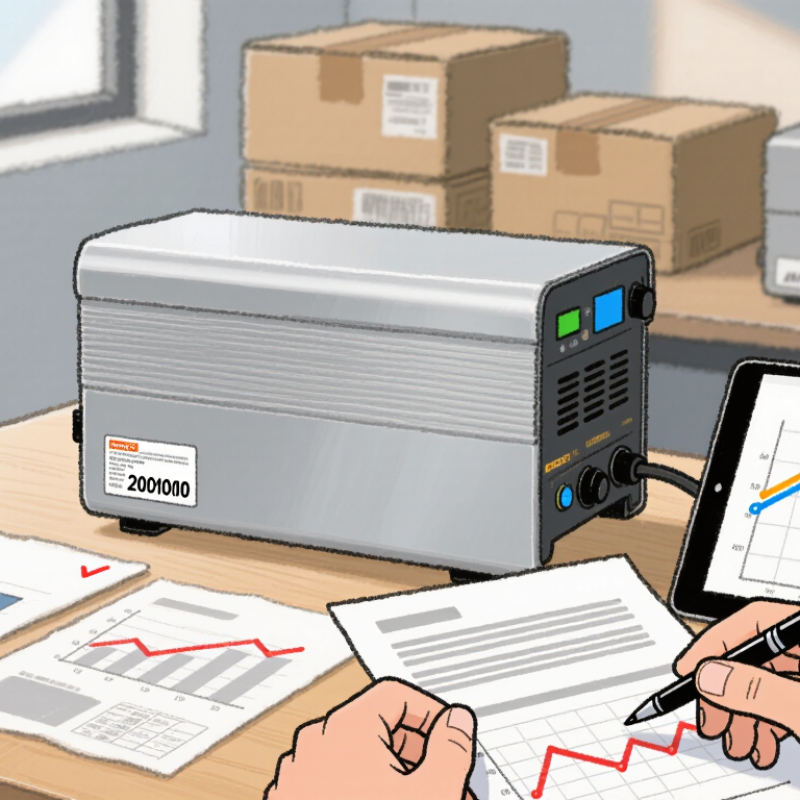
How to Find a Reliable Inverter Importer?

Define Your Inverter Requirements and Import Scope

Before contacting an inverter importer, define the job the equipment must perform. Record the system type, input voltage, output voltage, frequency, and expected continuous load. Include startup surges from pumps or refrigerators; these can exceed normal running demand. Note the battery voltage and chemistry if storage is involved, along with any charging requirements. Small details matter.

Set the import scope just as clearly. Decide whether you need inverters only or a complete package with cables, monitoring devices, and accessories. State the destination, estimated order quantity, preferred delivery window, and packaging needs. If you require sample units or spare parts, list them separately. Ambiguity here can lead to a quotation that looks attractive but excludes essential items.

Send the same specification to each potential importer. Ask for matching datasheets, test information, warranty terms, and details of technical support. Check that quoted models meet your actual load profile, not just a headline power rating. A simple comparison sheet helps. Still, requirements can change: perhaps the final battery choice is not settled yet. Mark uncertain items openly, then ask how they affect compatibility, cost, and lead time before placing an order.

Identify Potential Importers Through Verifiable Industry Channels

Finding a reliable inverter importer starts with verifiable industry channels, not a polished website. Search directories maintained by electrical, solar, or renewable-energy trade associations. Check whether each listing includes a physical address, business registration details, product categories, and operating history. Treat it as a lead, not proof.

Exhibitor lists from established industry trade fairs can help you identify active importers. Cross-check company details through local chambers of commerce or relevant trade groups. Then ask for references from commercial customers and, with permission, contact them directly. Ask about delivery timelines, after-sales support, and how warranty claims were handled. Specific answers matter.

Verify any certificates with the issuing organization, and confirm that the documents cover the inverter models being offered. Request sample paperwork, such as a quotation and product specification sheet, and compare names and addresses across documents. No channel is perfect. A directory can be outdated, and a confident sales representative can still give incomplete answers. I would pause if references cannot be checked or basic details keep changing. A careful cross-check takes time, but it can prevent costly surprises.

How to Find a Reliable Inverter Importer: Verify Industry Credentials

Check whether an importer can provide verifiable documentation for relevant safety, grid-interconnection, and quality-management standards. The chart shows the publication years of the listed editions—not importer ratings.

Confirm certificate validity, scope, and issuing-body credentials directly with the relevant certification body or standards organization.

Assess Supplier Credentials, Product Compliance, and Technical Support

How to Find a Reliable Inverter Importer?

Check the importer’s registered business details, trade references, and experience with your destination market. Ask for certificates and test reports that match the exact inverter model, not just a similar product. Requirements vary by market, so confirm relevant safety and grid-connection standards with a qualified local professional. IRENA’s Renewable Capacity Statistics 2024 reports that global renewable power capacity grew by 473 GW in 2023, including 346 GW of solar capacity. That rapid expansion makes careful supplier screening worthwhile.

Product compliance is only part of the assessment. Ask how the importer handles warranty claims, firmware updates, replacement parts, and technical questions after delivery. Request a sample commissioning checklist or a support case example. A useful answer should name response times and escalation steps. If possible, test a sample unit under realistic load and check its monitoring logs and thermal behavior. Paperwork can look perfect; the sample may still disappoint.

Tips: Request a model-specific document pack, verify certificate details independently, and get support commitments in writing. Ask who handles troubleshooting in your time zone. Small details matter.

Compare Quotations, Trade Terms, and Total Landed Costs

Compare each inverter quotation line by line, not by headline price. Request the model, rated output, efficiency, operating voltage, protection rating, included accessories, and warranty terms. Check whether testing, export packing, and manuals are included. A missing item becomes a later charge.

Compare trade terms on the same basis. FOB, CIF, and DDP can assign freight, insurance, clearance, and delivery costs differently. Confirm the named place and responsibilities in writing. The International Chamber of Commerce’s Incoterms rules clarify cost and risk allocation, but do not replace a full quote review. UNCTAD’s Review of Maritime Transport 2024 reports that shipping carries over 80% of global trade by volume. Costs move.

Build a landed-cost sheet with unit price, inland haulage, freight, insurance, duties, brokerage, port handling, local delivery, and payment fees. Check tax treatment with a qualified local broker; rates depend on destination and product classification. The IEA’s Renewables 2024 forecasts nearly 5,500 GW of renewable capacity additions during 2024–2030, with solar PV providing close to 80% of that growth. This scale makes delivery timing and replacement stock worth pricing, not assuming. Even a careful sheet misses something: exchange rates and freight quotes can shift before payment. Leave a contingency, and state its assumptions.

How to Find a Reliable Inverter Importer? — Compare Quotations, Trade Terms, and Total Landed Costs

Comparison Item Offer A Offer B Offer C
Product basis 100 hybrid inverters, 5 kW, single-phase 100 hybrid inverters, 5 kW, single-phase 100 hybrid inverters, 5 kW, single-phase
Quoted trade term FOB named port CIF named destination port EXW supplier premises
Goods price per unit US$420 US$438 US$405
Goods value for 100 units US$42,000 US$43,800 US$40,500
Estimated origin charges Included in FOB price Included in CIF price US$950
Estimated ocean freight US$2,200 Included in CIF price; estimated allocation: US$1,564 US$3,100
Estimated cargo insurance US$126 Included in CIF price; estimated allocation: US$137 US$134
Estimated customs value (CIF basis) US$44,326 US$45,500 US$44,684
Illustrative customs duty 5%: US$2,216 5%: US$2,275 5%: US$2,234
Estimated destination clearance and port fees US$850 US$750 US$900
Estimated inland delivery US$450 US$400 US$550
Estimated landed total, excluding import taxes US$47,843 US$48,925 US$49,368
Estimated landed cost per unit US$478.43 US$489.25 US$493.68
Payment terms to verify Deposit and balance before shipment; confirm inspection and release conditions Deposit and balance before shipment; confirm freight and insurance details Deposit and balance before collection; confirm export handling responsibilities
Lead time to confirm Production time plus booked transit time Production time plus seller-arranged transit time Production time; buyer arranges pickup and export forwarding
Documents to request Commercial invoice, packing list, bill of lading, certificate of origin, and applicable test reports Commercial invoice, packing list, bill of lading, insurance certificate, and applicable test reports Commercial invoice, packing list, export documents, certificate of origin, and applicable test reports
Reliability checks Verify factory and exporter details, sample quality, warranty terms, and shipment references Check the named destination, insurance coverage, delivery exclusions, and warranty process Confirm pickup location, export clearance arrangements, packaging, and responsibility for loading

Illustrative comparison only—not supplier quotations or a customs assessment. Costs are estimated in US dollars for 100 units. The example assumes a 5% customs duty on the stated CIF customs value; actual duty, tax, valuation rules, port charges, and delivery costs depend on the destination and product classification. Import VAT or other recoverable or non-recoverable taxes are excluded. Confirm the exact Incoterms® rule and named place or port in each written quotation, and check the applicable import requirements before ordering.

Verify Samples, Contracts, and Shipment Details Before Ordering

A reliable inverter importer should let you inspect a representative sample before you commit. Ask for a unit with the same rated power, connectors, and casing as the proposed order. Check the label, terminal fit, fan noise, and manual. If possible, have a qualified technician test its output under a suitable load. A clean sample is useful, but it cannot guarantee every production unit will match. It is easy to overlook that gap.

Put the important promises in the contract, not just in chat messages. Specify model configuration, quantity, inspection criteria, warranty process, delivery schedule, and what happens if goods fail inspection. Confirm payment milestones and the agreed shipping term, named destination, and responsibility for freight or insurance. Vague wording can cause real delays. I still find small details easy to miss, especially when several versions look almost identical.

Tips: Photograph the sample and keep its test notes. Before shipment, request clear photos of packed cartons, labels, and pallet count. Match those details against the packing list and invoice, then confirm the carrier, tracking reference, and estimated departure date. If an answer changes, ask for the updated document in writing.

logo

SOLARIC Showroom Address:
54 E. Rodriguez Jr. Ave (C5), Warehouse #9, Bagong Ilog, Pasig

Schedule: Monday to Friday 7AM to 5PM. Saturdays 8AM to 3PM.

Solaric Corp. (by appointment only)
15/F Jollibee Tower, F. Ortigas Jr. Cor Garnet Rd., Ortigas Center, Pasig

Email: [email protected]

Cell/Text: +63-917-860-3141 | +63 908 377 5577

Solaric Equipment

For Solar Professionals, Contractors, and Installers

Call / Email to reserve/pickup/ request delivery: Monday to Friday 7AM to 5PM. Saturdays 8AM to 3PM

© 2013 - 2026 Solaric Corp. All Rights Reserved