Who Are the Top 10 Solar Panel Kit Suppliers in China?
China’s solar industry includes manufacturers, exporters, and system integrators serving residential, commercial, and off-grid projects. Their product ranges may include panels, inverters, mounting hardware, cables, and monitoring equipment. A solar panel kit can look complete in a catalog, yet small differences matter: connector types, inverter capacity, mounting compatibility, and the clarity of installation instructions. Details count.
This guide introduces ten suppliers for buyers comparing Chinese solar panel kits. It considers product scope, manufacturing experience, technical documentation, customization options, warranty terms, and support after delivery. These factors can help identify suppliers worth investigating, but they do not guarantee that a particular kit fits every project. A small cabin, a warehouse roof, and a mobile application have different requirements. One size rarely fits all.
Supplier claims also deserve careful checking. Ask for current product specifications, applicable test documents, component brands, and written warranty conditions. If possible, request customer references or examine a sample before placing a large order. Shipping schedules and after-sales response times can matter as much as headline pricing. This takes effort.
The companies featured here are presented as potential sourcing options, not as a universal ranking for every buyer. Supplier capabilities change, and published information may not tell the whole story. A shortlist is only a starting point. Verify the details against your own design, budget, and installation needs before making a decision.
Defining Solar Panel Kits and Criteria for Ranking Chinese Suppliers
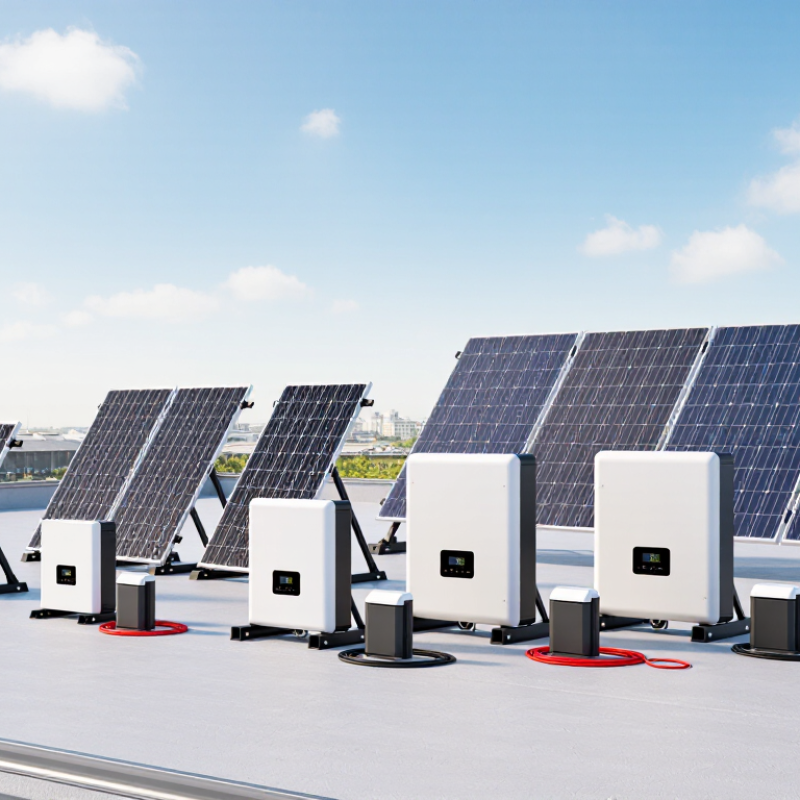
A solar panel kit is a coordinated set of components designed to generate and manage electricity. It may include panels, an inverter, mounting hardware, cables, and, in some configurations, a battery and charge controller. The exact contents vary. Buyers should check whether the kit is grid-connected or intended for an off-grid setup, and whether installation parts are included. A neat product photo can hide missing brackets or short cables.
Comparing Chinese suppliers requires more than checking quoted prices. A useful assessment looks at manufacturing experience, product specifications, quality-control procedures, and the clarity of technical documents. Ask for test reports that match the offered model, not a similar product. Confirm panel output, inverter capacity, battery chemistry and usable storage, where applicable. Details matter.
Delivery and after-sales support deserve equal attention. Request realistic production times, packaging information, warranty terms, and a clear process for handling damaged goods or faults. Ask how the supplier verifies components before shipment. A responsive technical team can help resolve compatibility questions, though promises alone prove little. Independent audits and sample inspections can provide stronger evidence. Ranking suppliers is never perfectly objective; project size, climate, and installer requirements can change what “best” means. A low-cost kit may suit a small cabin, but not a demanding daily load.
China’s PV Manufacturing Share Exceeded 80% Across Key Stages in 2022 (IEA)
China’s solar manufacturing strength is more than a headline. The International Energy Agency reported that China held over 80% of global manufacturing capacity across key photovoltaic stages in 2022. These stages include polysilicon, wafers, cells, and modules. Such concentration helps explain why many solar panel kits draw on Chinese-made components, even when kits are assembled or sold elsewhere.
Scale can support steady production and a broad choice of components. But it does not guarantee that every kit is well matched to a home, cabin, or small workshop. Check the panel output, inverter rating, battery capacity, and included cables as one system. Look closely at warranty terms and test documentation, too. Details matter.
A practical comparison should also consider shipping time, replacement-part access, and clear installation guidance. Ask suppliers how kit ratings were measured, and whether listed output reflects real operating conditions. A sunny-day figure can look impressive. It may not tell the whole story. I would not judge quality by manufacturing origin alone; specifications and traceable evidence deserve equal attention.
Comparing Kit Performance by Module Efficiency, Power Rating, and Warranty
Who Are the Top 10 Solar Panel Kit Suppliers in China?
When comparing solar panel kits, look beyond the headline wattage. Module efficiency shows how much sunlight becomes electricity per unit of panel area. Fraunhofer ISE’s Photovoltaics Report 2024 tracks the industry’s move toward higher-efficiency crystalline-silicon modules, with commercial products increasingly around the low-20% range. That matters on a compact roof: a 22% module can deliver more power from the same surface than a 20% module. Still, efficiency alone does not predict your daily output. Shade, temperature, and inverter sizing matter too.
Check the kit’s rated power and the conditions behind that number. A 600 W module does not produce 600 W continuously; heat, orientation, and clouds reduce real-world output. The IEA PVPS Snapshot of Global PV Markets 2024 reported 2023 global photovoltaic additions of about 447 GW, underscoring how quickly product specifications evolve. Compare the module rating with the inverter’s capacity, and ask whether batteries and mounting hardware are included. Read both product and performance warranties carefully. They cover different things. A long warranty sounds reassuring, but its value depends on clear terms, documented degradation limits, and accessible service. I would not choose on warranty length alone; the fine print can be easy to miss.
Who Are the Top 10 Solar Panel Kit Suppliers in China?
Comparing module efficiency, power rating, and warranty: broad market benchmarks, not supplier-specific rankings.
These ranges summarize specifications found across commercial solar modules and are not verified values for ten individual suppliers. Actual kit specifications and warranty terms vary by model; compare current manufacturer datasheets before purchasing.
Checking Supplier Quality Against IEC 61215 and IEC 61730 Standards
Who Are the Top 10 Solar Panel Kit Suppliers in China?
Comparing China’s leading solar panel kit suppliers requires more than checking price or production capacity. IEC 61215 evaluates a module’s design durability under environmental stress. Testing may include thermal cycling, damp heat, humidity-freeze exposure, mechanical loading, and hail impact. Ask whether the certificate covers the exact panel model, dimensions, cell type, and power range offered.
IEC 61730 focuses on electrical and construction safety. It examines insulation, grounding, creepage distances, mechanical protection, and resistance to fire-related risks. A supplier should provide current test reports from a recognized laboratory, not only a copied certificate. Check the report number, factory address, production site, and certification scope. These details often reveal mismatched documents.
Look closely at the kit, too. Inspect connectors, cables, mounting rails, inverters, and battery interfaces as separate components. A compliant panel cannot automatically make the entire kit compliant. Request serial-number traceability, incoming material records, and final inspection photos. I would also compare the tested bill of materials with the shipment version. Small substitutions can matter. A certificate alone is not enough.
Some suppliers communicate confidently but answer vaguely about retesting after design changes. That is a warning sign. Ask for warranty terms, degradation data, and responses to previous field failures. Independent sample testing remains worthwhile, even when documents appear complete. No review is perfect; factory conditions and component sourcing can change after approval. Regular audits and shipment inspections reduce that uncertainty.