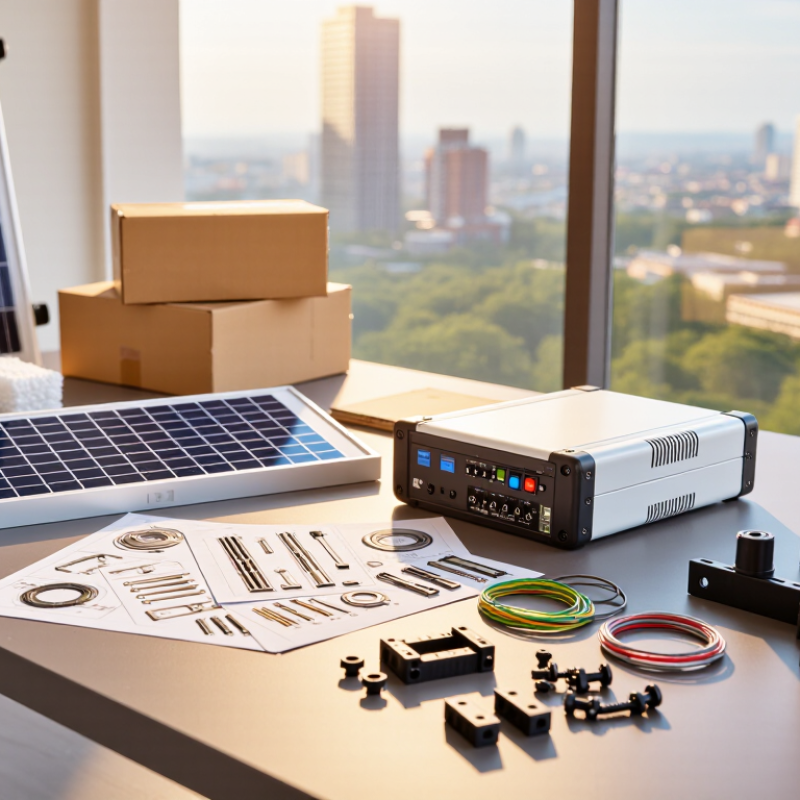
China Top DIY Solar Kit Suppliers for Global Buyers

Global demand for residential solar is moving from curiosity to practical investment. The International Energy Agency’s Renewables 2024 report expects solar photovoltaic capacity to drive most renewable growth through 2030. IRENA’s Renewable Capacity Statistics 2025 recorded 4,448 GW of global renewable capacity by the end of 2024. Solar contributed the largest share of new installations. These figures explain why international buyers are examining China’s mature manufacturing base for DIY solar equipment.

China offers broad supplier choices, from compact balcony systems to complete rooftop packages. A reliable DIY solar supplier should provide verified module specifications, compatible inverters, mounting hardware, wiring diagrams, and clear warranty terms. Product traceability matters. So does factory experience. Buyers should review IEC test reports, transport packaging, replacement procedures, and local grid requirements before ordering. The IEA PVPS Trends 2024 report also highlights the rapid expansion of global photovoltaic deployment, but falling prices do not remove technical risks. Cheap components can create expensive failures.

This guide examines China’s top DIY solar kit suppliers for global buyers. It compares product quality, customization, certifications, communication, and after-sales support. Real purchasing decisions involve more than factory prices. Shipping delays, connector standards, voltage differences, and installation permissions can change the final cost. Some supplier information remains difficult to verify. That deserves caution. A responsible buyer should request current documents and sample specifications, not rely on attractive listings alone. DIY solar can simplify small-scale adoption, but qualified electrical inspection may still be necessary. Safety must remain practical, not promotional.

China Top DIY Solar Kit Suppliers for Global Buyers

How China’s DIY Solar Kit Supplier Market Is Structured

China’s DIY solar kit supplier market has several layers. Manufacturers produce panels, inverters, batteries, mounting rails, and cables. Trading companies combine these parts into ready-to-install packages. System integrators often add design support, wiring diagrams, and remote guidance. Some suppliers offer OEM or ODM services for overseas distributors.

The market is efficient, but not perfectly transparent. One supplier may manufacture batteries while outsourcing the inverter. Another may provide excellent panels but weak installation instructions. Buyers should request a detailed bill of materials, production photos, test reports, and warranty terms. Check whether rated power matches real operating conditions. Ask how replacement parts are handled after delivery. Small details matter, especially when a damaged connector stops an entire kit.

Tips: Compare suppliers by complete system value, not only price. Request sample units before bulk orders. Confirm plug types, grid compatibility, packaging strength, and documentation for your destination market. A factory audit or independent inspection can reveal inconsistent labeling, crowded cable boxes, or poor moisture protection. Mistakes still happen, even with experienced suppliers. That is why written specifications and staged payments remain practical safeguards.

How to Identify Reliable Chinese DIY Solar Kit Suppliers

China Top DIY Solar Kit Suppliers for Global Buyers

How to Identify Reliable Chinese DIY Solar Kit Suppliers

Reliable DIY solar kit suppliers should provide more than attractive prices. Check their factory address, production capacity, product datasheets, and export experience. Ask for recent test reports covering panels, batteries, controllers, and inverters. Confirm that the reports match the exact model you will receive. A professional supplier should explain voltage limits, connector types, mounting parts, and battery protection clearly. Vague answers suggest technical weaknesses.

Tips: Request one sample kit before placing a large order. Test the wiring, labels, packaging, and installation guide. Also inspect how the supplier handles a damaged component. Their response often reveals more than their sales presentation. Verify warranty terms in writing, including replacement procedures, response times, and shipping responsibilities. Check whether spare parts remain available after the initial purchase.

Supplier verification should include a live factory video or an independent inspection. Review company registration details and compare them with the quotation and bank account. Avoid unusually low prices, especially when shipping and safety components are excluded. Payment terms deserve attention too. A secure, documented process reduces avoidable risk. No checklist is perfect. Even experienced buyers can overlook regional grid standards or roof-load limits. Ask an electrician to review compatibility before installation, particularly for off-grid systems and lithium batteries.

How to Compare Quality, Certifications, and Warranty Terms

For global buyers, comparing a DIY solar kit starts with evidence, not attractive output numbers. Ask suppliers for recent test reports, serial traceability, and clear component specifications. Check whether panels meet relevant IEC standards, such as IEC 61215 and IEC 61730. Inverters should have suitable safety and grid-related certifications for the destination market. Requirements differ by country, so local verification remains necessary. Do not rely on a certificate image alone. Confirm the issuing laboratory and report number.

Quality also appears in small details. Review panel degradation data, temperature coefficients, connector compatibility, cable size, and enclosure ratings. Look for electroluminescence images or flash-test records from the actual production batch. Packaging deserves attention too. Crushed corners, weak pallets, or missing moisture protection can create problems before installation. A factory audit or pre-shipment inspection adds useful confidence. Still, one inspected sample cannot prove every kit is perfect. That limitation matters.

Warranty terms often reveal supplier reliability. Separate product warranties from performance warranties, then check their starting dates and exclusions. Ask who pays for replacement shipping, labor, customs handling, and damaged returns. Confirm the claim process, response time, and whether the warranty transfers to another owner. Vague promises are risky. Get every commitment in writing. A longer warranty may look impressive, but weak after-sales support can make it nearly useless. Test communication before ordering by requesting technical answers and a sample document set. Small delays may expose larger service problems later.

China Top DIY Solar Kit Suppliers for Global Buyers - How to Compare Quality, Certifications, and Warranty Terms
Comparison Dimension What to Check Recognized Standard or Evidence Recommended Buyer Benchmark Warning Signs Priority
Solar Module Quality Cell technology, rated output, power tolerance, temperature coefficient, mechanical load rating, and degradation commitment. IEC 61215 for design qualification and type approval; IEC 61730 for photovoltaic module safety qualification. Request the exact module model, independent test reports, flash-test data, serial-number traceability, and a published product warranty. Only a generic “CE” logo is provided without a model number, test report, or technical datasheet. High
Inverter Safety Conversion efficiency, maximum DC voltage, MPPT range, anti-islanding function, enclosure rating, and grid compatibility. IEC 62109-1 and IEC 62109-2 address safety requirements for power converters used in photovoltaic systems. Grid-code compliance depends on the destination market. Confirm the exact grid standard required by the importing country, such as applicable EN, VDE, UL, or national requirements, before shipment. The supplier lists “universal grid support” but does not identify the approved grid profile or firmware version. High
Battery Safety Battery chemistry, usable capacity, battery-management system, cycle conditions, thermal protection, and transport documentation. IEC 62619 is commonly used for safety requirements of industrial lithium secondary cells and batteries. UN 38.3 testing is required for the transport of applicable lithium batteries. Obtain the battery test report, UN 38.3 test summary, safety data sheet, rated conditions, and clearly stated usable—not only nominal—capacity. Capacity is quoted without voltage, depth-of-discharge limits, temperature range, or transport test documentation. High
Electrical Protection Overcurrent protection, DC isolator, surge protection, grounding, residual-current protection, and cable sizing. Protection requirements must follow the installation code and electrical regulations of the destination market. Component-specific IEC or UL approvals should be verified separately. Request a single-line diagram, protection-device ratings, wiring diagram, earthing instructions, and installation limits for each kit configuration. Protection devices are described as “included” without ratings, manufacturer datasheets, or a wiring diagram. High
Ingress Protection Resistance of outdoor enclosures to dust and water, including connectors, junction boxes, battery cabinets, and inverter housings. IP ratings are defined under IEC 60529. The rating applies to the tested enclosure and does not automatically cover the complete system after installation. Verify the IP rating on the exact product datasheet and confirm whether cable glands, connectors, and installation orientation are included in the test scope. An IP rating is advertised for the system although only one enclosure was tested. Medium
Factory Quality Management Incoming inspection, process controls, final inspection, calibration, nonconformance handling, and batch traceability. ISO 9001 certification demonstrates a quality-management system; it does not by itself certify the performance or safety of a particular solar product. Check the certificate scope, issuing body, validity, factory address, audit status, and whether the certificate covers the actual production site. An ISO certificate is supplied with an unrelated address, expired validity, or no identifiable certification body. High
Market Certifications Regulatory documents required in the destination country or region, including electrical safety, electromagnetic compatibility, chemical restrictions, and radio requirements where applicable. CE marking is supported by an EU Declaration of Conformity for applicable EU legislation. RoHS addresses restrictions on specified hazardous substances in applicable electrical and electronic equipment. Request the Declaration of Conformity, technical file references, test reports, and the exact model numbers covered by each document. A CE logo is presented as a universal quality certificate, or documents do not match the shipped model. High
Performance Verification Rated power, efficiency, battery capacity, standby consumption, operating temperature, and output stability. Performance claims should be linked to defined test conditions, measurement methods, tolerances, and laboratory reports. Require a pre-shipment inspection or sample test covering output, insulation, polarity, communication, charging, and protective shutdown functions. Marketing specifications omit test conditions or use peak values as continuous operating ratings. High
DIY Installation Scope Whether the kit is plug-and-play, requires a licensed electrician, or involves utility interconnection and permitting. Installation rules are determined by local electrical, building, fire, and utility regulations; certification does not replace local approval. Obtain a country-specific installation manual, circuit limits, connector compatibility details, and a clear list of work requiring qualified personnel. The supplier promises unrestricted DIY installation for grid-connected equipment in every country. High
Warranty Coverage Product warranty period, performance warranty, covered components, labor, shipping, exclusions, and remedy procedure. Warranty terms are contractual and vary by product. A solar module product warranty and a module performance warranty are separate commitments. Compare warranty start date, claim evidence, replacement or refund remedy, freight responsibility, transferability, and whether accessories have shorter coverage. Warranty duration is advertised without exclusions, claim address, remedy terms, or written conditions. High
Battery Warranty Conditions Cycle count, energy throughput, depth of discharge, temperature, state-of-charge limits, and retained-capacity threshold. Battery warranties commonly depend on operating conditions and may end when either a time limit or throughput/cycle limit is reached. Request a written warranty table showing the retained-capacity threshold, permitted operating window, exclusions, and proof required for a claim. Only a number of years is stated; cycle limits, usable capacity, and operating conditions are not defined. High
After-Sales Support Response time, remote diagnostics, firmware support, spare parts, replacement process, and technical documentation. Support quality is best evaluated through written service-level commitments and a documented escalation process. Confirm support channels, normal response time, spare-parts availability, remote-access requirements, and whether firmware updates remain available after purchase. Support is limited to a sales contact, with no troubleshooting procedure or replacement-part policy. Medium
Supply-Chain Traceability Factory identity, bill of materials, lot numbers, serial numbers, production date, and component consistency. Traceability records should connect the shipped product to its factory, production batch, test results, and applicable certificates. Request sample serial numbers, packing-list details, production records, and written notice procedures for component substitutions. Product labels, certificates, and invoices use inconsistent model numbers or factory information. High
Shipping and Packaging Packaging strength, moisture protection, palletization, dangerous-goods classification, and damage inspection procedure. Lithium batteries may be subject to dangerous-goods transport rules. UN 38.3 documentation and carrier-specific requirements should be checked before shipment. Confirm packing photographs, carton dimensions, gross weight, battery shipping classification, labels, and the process for reporting transit damage. Battery shipments are offered without transport documents, compliant labels, or defined insurance responsibility. High
Commercial Evaluation Total landed cost, minimum order quantity, sample policy, payment terms, lead time, and replacement-part pricing. Supplier quotations should separate product price, tooling or customization, inland freight, export charges, insurance, duties, taxes, and destination delivery. Compare at least three like-for-like quotations using the same system capacity, certification scope, Incoterm, warranty coverage, and inspection requirements. The lowest quotation excludes certification, accessories, freight, testing, or warranty-related costs. Medium
Buyer note: Certification requirements, grid approvals, installation rules, import documentation, and warranty enforceability depend on the destination market and the exact product model. Always verify current documents with the issuing body and the relevant local authority before purchase.

How to Evaluate Prices, Customization, Shipping, and Support

China Top DIY Solar Kit Suppliers for Global Buyers

Evaluating a DIY solar kit starts with the real landed price, not the factory quote. Add packaging, inspection, freight, insurance, duties, and local delivery. Ask for a line-by-line pro forma invoice. A cheap kit may exclude mounting rails or suitable cables. Compare identical wattage, battery capacity, inverter output, and warranty terms. Small details matter.

Customization should match the installation, not just the logo on the box. Confirm panel dimensions, connector types, battery chemistry, inverter voltage, and cable lengths. Ask about minimum order quantities and sample charges.

Request test reports and safety documentation relevant to your market. A supplier should explain technical limits clearly. Vague answers are a warning.

Shipping deserves practical checking. Request carton dimensions, gross weight, loading photos, and a realistic delivery schedule. Confirm whether the quoted term includes port handling and customs responsibilities.

Support is equally important after arrival. Test response times before payment by sending technical questions. Ask for wiring diagrams, installation manuals, spare parts, and a replacement process. I have seen projects delayed by one missing connector. My own evaluation method is not perfect; price comparisons can miss currency changes and seasonal freight costs. Leave room for those risks.

How Global Buyers Can Verify and Order Solar Kits Safely

China Top DIY Solar Kit Suppliers for Global Buyers

How Global Buyers Can Verify and Order Solar Kits Safely

Global solar-kit purchasing is expanding rapidly. IRENA reported 452.1 GW of new solar capacity worldwide in 2024. This growth creates more supplier options, but documentation quality can vary. A low quotation does not prove reliable performance. Buyers should request a complete bill of materials, production address, warranty terms, and recent test records. In practice, a polished datasheet can still hide unclear component origins.

Before ordering, compare the exact panel, inverter, battery, cable, and mounting specifications. Ask for relevant IEC test reports, safety certificates, and product serial numbers. Verify certificates directly with the issuing laboratory. Check whether the report matches the proposed model, not an older version. TÜV Rheinland’s Solar Grade Data Sheet program has highlighted the importance of consistent module testing and field performance data. One overlooked detail can affect the entire kit.

Tips: Start with a small sample order. Use staged payments linked to inspection milestones. Request timestamped factory photos, packaging images, and a pre-shipment inspection. Confirm shipping terms, insurance, spare parts, and local installation requirements in writing. A third-party inspection is useful, though it cannot replace technical judgment. Keep every document, including chat records and revised quotations. Mistakes happen when buyers trust urgency more than evidence.

Global Solar PV Capacity Growth: Why Supplier Verification Matters

The rapid expansion of global solar PV capacity increases the importance of checking supplier documentation, product certifications, warranty terms, factory capability, and shipment records before ordering solar kits.

Global installed solar photovoltaic capacity, 2019–2023. Source: IRENA, Renewable Capacity Statistics 2024.

logo

SOLARIC Showroom Address:
54 E. Rodriguez Jr. Ave (C5), Warehouse #9, Bagong Ilog, Pasig

Schedule: Monday to Friday 7AM to 5PM. Saturdays 8AM to 3PM.

Solaric Corp. (by appointment only)
15/F Jollibee Tower, F. Ortigas Jr. Cor Garnet Rd., Ortigas Center, Pasig

Email: [email protected]

Cell/Text: +63-917-860-3141 | +63 908 377 5577

Solaric Equipment

For Solar Professionals, Contractors, and Installers

Call / Email to reserve/pickup/ request delivery: Monday to Friday 7AM to 5PM. Saturdays 8AM to 3PM

© 2013 - 2026 Solaric Corp. All Rights Reserved